
What is BYOOVIZ®

(ranibizumab-nuna)?

ABOUT BYOOVIZ

BYOOVIZ is an FDA-approved biosimilar* to Lucentis® (ranibizumab injection)

*

Biosimilar means that the biological product is approved based on data demonstrating that it is highly similar to an FDA-licensed reference product, known as a reference product, and that there are no clinically meaningful differences between the biosimilar product and the reference product.
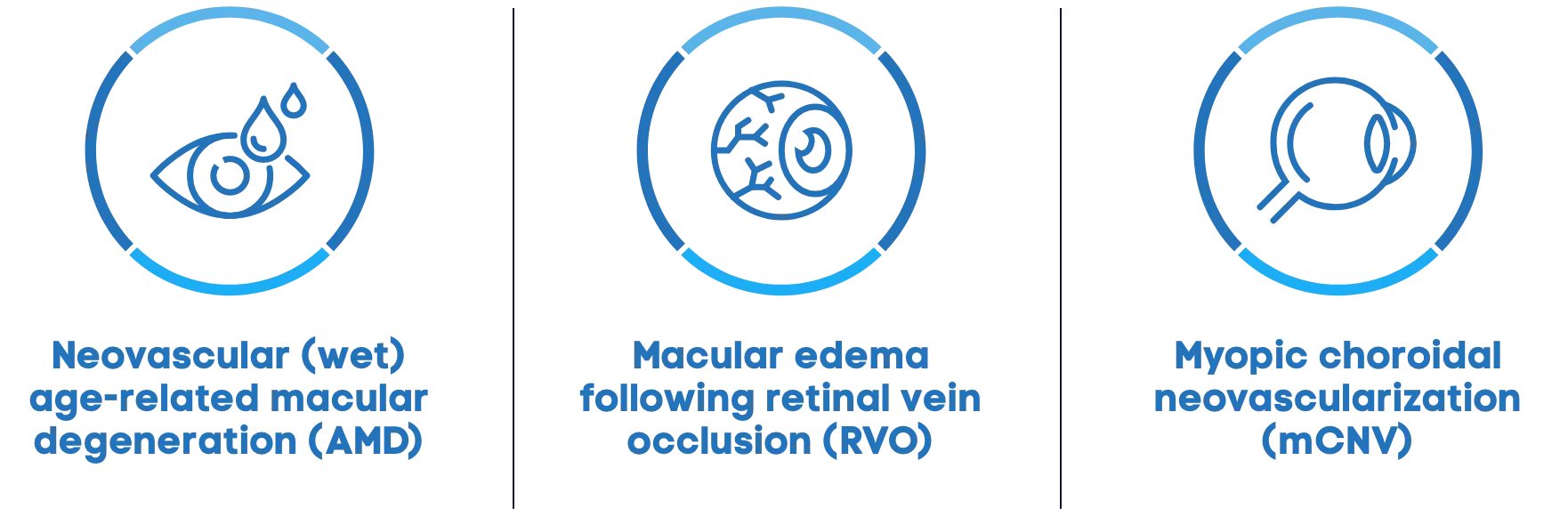
Consider talking to your healthcare provider about BYOOVIZ if you’ve been diagnosed with:
Neovascular (wet) age-related macular degeneration (AMD) | Macular edema following retinal vein occlusion (RVO) | Myopic choroidal neovascularization (mCNV)

BYOOVIZ is not licensed for diabetic retinopathy (DR) and diabetic macular edema (DME).

BYOOVIZ RESULTS

In a clinical trial for wet AMD, BYOOVIZ helped people achieve similar results as people receiving Lucentis, which included:
Helping to Maintain Vision
BYOOVIZ is approved for AMD, RVO, and mCNV.

You should not use BYOOVIZ if you have an infection in or around the eye or are allergic to BYOOVIZ or any of its ingredients.

The most common eye-related side effects of BYOOVIZ include:
  • Increased redness in the white of the eye
  • Eye pain
  • Small specks (floaters) in vision
  • Increased eye pressure

RECEIVING BYOOVIZ TREATMENT

BYOOVIZ is given as an injection into the eye. Preparing for your treatment can help keep you on track.

On the day of your BYOOVIZ treatment, your healthcare provider may:
  • Have you read an eye chart to check the status of your vision
  • Give you eye drops as needed
  • Check the condition of your eye by performing routine testing
Your healthcare provider’s office staff will try to keep you as comfortable as possible throughout treatment. Things they may do include:
  • Using a tool that will gently hold your eye open for cleaning and the injection
  • Utilizing eye drops to numb your eye before the injection
Neovascular (Wet) Age-Related Macular Degeneration (AMD)
BYOOVIZ 0.5 mg (0.05 mL) is administered by injection once a month (approximately 28 days). Your healthcare provider may choose an alternate administration schedule based on your specific needs.
Macular Edema Following Retinal Vein Occlusion (RVO)
BYOOVIZ 0.5 mg (0.05 mL) is administered by injection once a month (approximately 28 days).
Myopic Choroidal Neovascularization (mCNV)
BYOOVIZ 0.5 mg (0.05 mL) is initially administered by injection once a month (approximately 28 days) for up to three months. You may be retreated if needed.

FOLLOWING BYOOVIZ TREATMENT

Consider the following:
  • Keep in close contact with your healthcare provider’s office and be sure to follow any specific instructions they give you
  • Continue any drops prescribed to you by your doctor
  • If your eyes are feeling sensitive, avoid driving, wear sunglasses, and rest your eyes
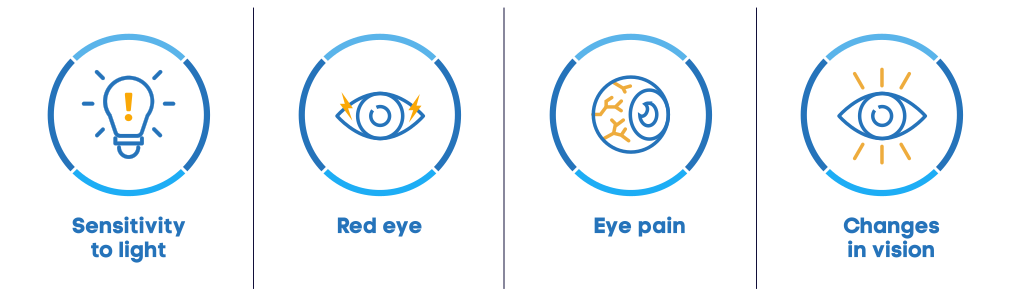
If you experience any of the following side effects, seek immediate care:
Sensitivity ti light | Red eye | Eye pain | Changes in vision
Your healthcare provider will monitor you prior to
and following each BYOOVIZ treatment.
Indication and Important
Safety Information
What is BYOOVIZ® (ranibizumab-nuna) injection? BYOOVIZ® is a prescription medicine for the treatment of patients with:
  • Neovascular (Wet) Age-Related Macular Degeneration (AMD)
  • Macular Edema Following Retinal Vein Occlusion (RVO)
  • Myopic Choroidal Neovascularization

IMPORTANT SAFETY INFORMATION

What Important Safety Information should I know about BYOOVIZ?

You should not use BYOOVIZ if you have an infection in or around the eye or are allergic to ranibizumab products or any of the ingredients in BYOOVIZ.

BYOOVIZ is a prescription medication given by injection into the eye, and it has side effects.

BYOOVIZ can cause serious side effects, including:
  • Detached retinas and serious eye infections. If your eye becomes red, sensitive to light, or painful, or if you have a change in vision, call or visit your healthcare provider right away
  • Increased eye pressure. Some patients have had increases in eye pressure before and within 1 hour of an injection. Your healthcare provider should check your eye pressure and eye health before and after your BYOOVIZ injection
  • Heart attacks or strokes. There is a potential risk of serious, sometimes fatal, problems related to blood clots, such as heart attacks or strokes
  • Severe inflammation of vessels in the retina, with or without blockage, have been reported with the use of ranibizumab products. Call your healthcare provider immediately if you experience any changes in vision
  • Some patients using ranibizumab products have serious side effects related to the injection. These include serious infections inside the eye, detached retinas, and cataracts
The most common eye-related side effects include:
  • Increased redness in the white of the eye
  • Eye pain
  • Small specks (floaters) in vision
  • Increased eye pressure

The most common non–eye-related side effects are nose and throat infections, anemia, nausea and cough.

You are encouraged to report suspected adverse reactions to the FDA. Visit www.fda.gov/medwatch, or call 1-800-FDA-1088.

Please see full Prescribing Information.